Youth Mental Health Services in Philadelphia, PA: A Compassionate Guide for Families


The phone call confirms it: a six-month waitlist. For a parent in Philadelphia, seeking help for your child’s mental health can feel like navigating a maze of closed doors, confusing options, and mounting stress over insurance coverage. Finding accessible and effective youth mental health services Philadelphia PA shouldn’t add to your family’s burden. You deserve clear answers, a supportive partner, and a path forward that feels hopeful, not overwhelming. We understand the weight of this moment, and we are here to help.
This compassionate guide was created to bring clarity and confidence to your journey. Here, you will discover how to navigate Philadelphia’s pediatric mental health landscape, from understanding the different levels of care to identifying truly evidence-based providers who partner with your family. We will demystify the process of using your insurance for therapy and provide the tools you need to find specialized, in-network care. Our goal is simple: to empower you to secure the right support that helps your child build lasting resilience and thrive.
Key Takeaways
- Learn to identify the right level of care for your child, from immediate crisis support to long-term outpatient therapy that builds resilience.
- Understand the role of evidence-based treatments like Cognitive Behavioral Therapy (CBT) and how they are used to develop practical coping skills.
- Discover how to navigate your insurance benefits to find accessible and affordable youth mental health services Philadelphia PA.
- Find out what to expect from a family-centered intake process and how a personalized care plan is developed to meet your child's specific needs.
Understanding the Youth Mental Health Landscape in Philadelphia
Navigating your child's emotional well-being in today's world can feel overwhelming. It's important to know that support is not reserved for a crisis. Modern care spans a full spectrum, from building everyday emotional wellness to providing specialized treatment for acute concerns. We define youth mental health services as a collaborative, evidence-based process designed to empower young people ages 8-29 with the skills for long-term resilience. In 2026, as Pennsylvania continues to address the widespread youth mental health crisis, local families are increasingly seeking proactive, high-quality care.
This heightened need is why so many Philadelphia families are now actively looking for specialized outpatient support. They recognize that early intervention is key to helping children and teens navigate the unique academic and social pressures they face. Finding the right youth mental health services in Philadelphia, PA means partnering with a clinical team that understands both the science of therapy and the heart of your family.
Signs Your Child May Benefit from Professional Support
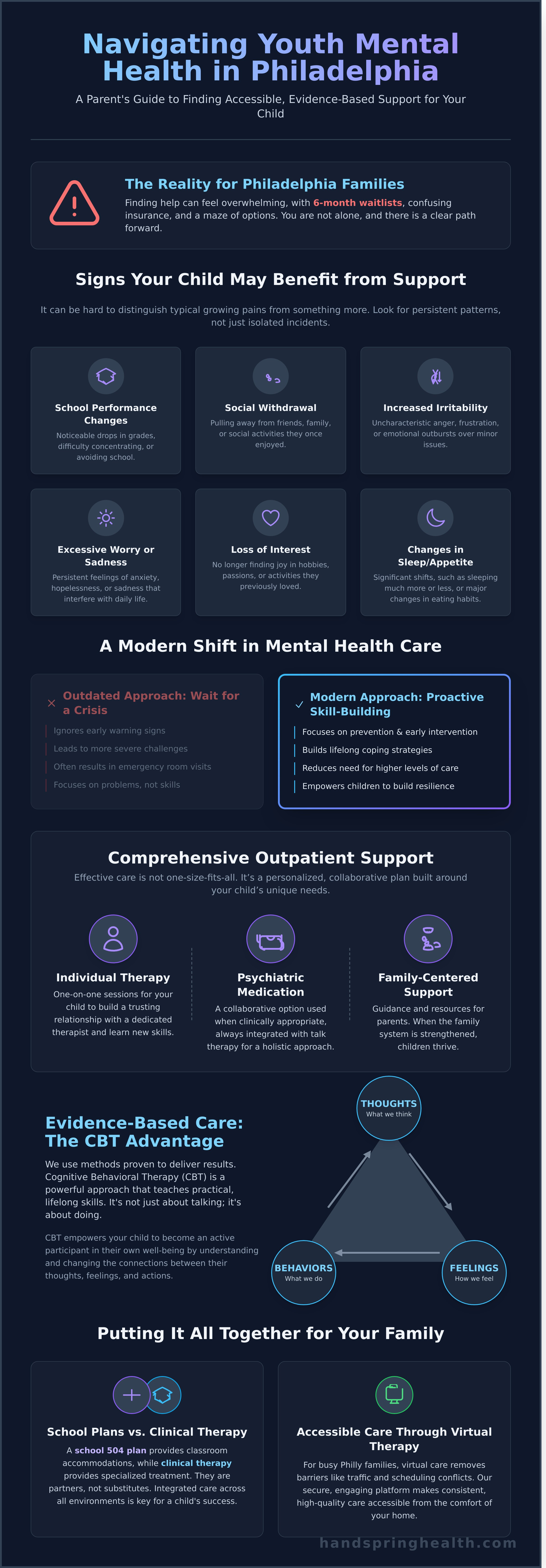
It can be difficult to distinguish between typical growing pains and something more serious. You might notice persistent changes in your child’s school performance, a withdrawal from friends, or increased irritability. While some moodiness is normal, patterns of deep sadness, excessive worry, or a loss of interest in favorite activities can signal underlying anxiety or depression. Learning how to know when your child may benefit from therapy is a crucial first step.
The Shift Toward Evidence-Based Outpatient Care
The outdated advice to "wait for a crisis" is no longer the recommended path. Modern, evidence-based outpatient programs focus on prevention and early skill-building. By engaging in therapy proactively, children and teens develop healthy coping strategies and emotional regulation skills that last a lifetime. This approach not only fosters resilience but also significantly reduces the need for emergency room visits at institutions like the Children's Hospital of Philadelphia (CHOP).
Types of Mental Health Support Available for Philly Youth
Navigating the landscape of support for your child can feel overwhelming. The key is understanding that effective care is not one-size-fits-all; it’s a personalized plan built around your child’s unique needs and your family’s goals. The best youth mental health services in Philadelphia, PA, integrate several components to create a holistic and supportive experience.
A comprehensive approach often includes a combination of core services working in harmony:
- Individual Therapy: One-on-one sessions where your child builds a trusting relationship with a dedicated therapist.
- Psychiatric Medication Management: A collaborative option, used when clinically appropriate and integrated with talk therapy.
- Family-Centered Support: Guidance for parents, because we know that when the family system is strengthened, children thrive.
Evidence-Based Approaches: The CBT Advantage
We are committed to using methods that are proven to deliver results. Our care is rooted in Cognitive Behavioral Therapy (CBT), a powerful, evidence-based approach. In simple terms, CBT helps children recognize the connection between their thoughts, feelings, and behaviors. Rather than just discussing challenges, we teach them practical, lifelong skills to manage anxious thoughts, regulate difficult emotions, and build confidence. This proactive framework empowers your child to become an active participant in their own well-being. Learn more about our evidence-based approach.
It's also important to distinguish between school accommodations and clinical care. While a school 504 plan provides crucial support in the classroom, it is not a substitute for specialized behavioral health treatment. A truly supportive strategy often involves both. As the Pennsylvania Department of Human Services outlines, integrated care systems are vital for ensuring a child’s needs are met across all environments.
Virtual vs. In-Person Therapy in the Philadelphia Area
For busy families from the Main Line to Center City, virtual therapy removes logistical barriers like traffic and packed schedules, making consistent, high-quality care more accessible than ever. Our modern, secure platform is designed to be engaging and create emotional safety, even for younger children. Many parents discover that the myth of virtual therapy being “less personal” quickly fades. By meeting your child in their own comfortable environment, our therapists can build a powerful and authentic connection that fosters trust and drives meaningful progress.
Choosing the Right Level of Care: Crisis vs. Outpatient
As a parent, one of the most difficult challenges is knowing when your child’s emotional distress requires immediate intervention versus ongoing therapeutic support. Understanding the difference between crisis care and outpatient services is the first step toward getting your child the right help at the right time. This guide provides clarity on how to navigate both paths with confidence.
A mental health crisis occurs when a child’s behavior puts them at immediate risk of harming themselves or others. In these moments, safety is the only priority. Conversely, outpatient therapy is designed for building skills and addressing challenges before they reach a crisis point. It is a proactive tool for building resilience, not a "fix" for a "broken" child.
Navigating Philadelphia’s Crisis Resources
When immediate safety is the priority, the most critical youth mental health services Philadelphia PA provides are its Crisis Response Centers (CRCs). If your child is expressing suicidal thoughts, engaging in self-harm, or experiencing psychosis, seek help immediately.
- Philadelphia Crisis Line: Call or text 988 for 24/7 support.
- Children's Crisis Treatment Center (CCTC): Offers walk-in services for children and teens at 1080 N. Delaware Avenue.
- Philadelphia Department of Behavioral Health and Intellectual disAbility Services (DBHIDS): Provides a 24-hour delegate line at (215) 685-6440.
At a walk-in evaluation, a clinical team will assess your child for safety, help de-escalate the situation, and create a short-term stabilization plan. After acute care, outpatient providers like Handspring Health bridge the gap, providing consistent, evidence-based therapy to maintain stability and foster long-term growth.
Questions to Ask a Potential Youth Therapist
Finding the right long-term partner for your child's mental health journey is crucial. When evaluating providers, it's important to look for clinical credentials (like LCSW, LPC, or PhD) and specialized pediatric training. The state's Bureau of Children's Behavioral Health Services supports a range of specialized care options, and your therapist should align with your family's needs. To feel confident in your choice, consider asking:
- What is your experience working with my child’s specific age group, from elementary-aged children to young adults?
- What is your therapeutic approach, and is it evidence-based for my child’s symptoms?
- What is your philosophy on parent involvement and coaching? How will we work together as a team?
These questions will help you find a clinician who not only connects with your child but also empowers you as a parent. We encourage you to explore our approach and meet our team of specialized clinicians to see if we are the right fit for your family.
Navigating Insurance and Affordability in Pennsylvania
One of the greatest hurdles for families seeking support can be navigating the complexities of insurance and cost. At Handspring Health, we are deeply committed to breaking down these barriers. We believe that every child deserves access to evidence-based care, which is why we actively partner with major insurance providers across Pennsylvania to make our services accessible and affordable for your family.
Understanding your coverage is the first step toward peace of mind. Investing in your child’s well-being today is an investment in their future resilience, preventing more significant challenges and building a foundation for lifelong emotional health.
Demystifying the Cost of Care
Understanding insurance terms is key to feeling empowered in your care journey. Your deductible is the amount you pay for care before your plan begins to pay. A co-pay is a fixed amount you pay for a session, while co-insurance is a percentage of the cost you share with your plan. Furthermore, virtual care inherently reduces hidden costs, saving you valuable time and money on travel, parking, and time away from work. For a full breakdown, we invite you to review our transparent pricing and insurance information.
The Role of Insurance in Quality Care
High-quality pediatric therapy is not exclusive to private-pay models. In fact, utilizing your in-network benefits is often the most effective way to ensure consistent, long-term support for your child without the strain of prohibitive out-of-pocket costs. This sustainable approach allows your family to fully engage in the therapeutic process.
When calling your insurance provider to verify your coverage for youth mental health services in Philadelphia PA, here is a helpful checklist to guide the conversation:
- What are my in-network mental or behavioral health benefits for my child?
- Do I need a referral or pre-authorization for outpatient therapy?
- What is my co-pay or co-insurance for each therapy session?
- Is there a limit on the number of sessions covered per year?
Our team is here to help you navigate these steps. We see ourselves as an extension of your family’s support system, dedicated to making exceptional care a reality. Learn more about our approach at handspringhealth.com.
The Handspring Health Approach in Philadelphia
Navigating your child’s mental health can feel overwhelming, but finding the right partner makes all the difference. At Handspring Health, we combine clinical authority with a warm, family-centered approach. We believe that the most effective youth mental health services Philadelphia PA families receive are built on a foundation of trust, evidence-based care, and genuine compassion. Our commitment is to provide a clear path forward, empowering your family with the tools and support needed to thrive.
The journey begins with a simple, transparent intake process. From your initial call to our care coordinators, we listen carefully to understand your concerns. This leads to a comprehensive evaluation with one of our specialized clinicians, who then collaborates with you to develop a personalized care plan. This isn't just a list of services; it's a roadmap tailored to your child's unique needs and your family's goals.
A Partnership in Your Child’s Development
Our goal moves beyond simply "fixing" challenging behaviors. We focus on fostering deep, lasting emotional resilience. Our clinicians work in close collaboration with you, the expert on your child, to set and celebrate meaningful milestones. This partnership is central to our model, and we empower parents through specialized behavioral training and guidance. Explore our parent coaching services to learn more about how we support you.
Starting the Journey Toward Healing
In the first session, we create a safe, welcoming space for both you and your child to share your experiences. We demystify the therapeutic process and set initial goals together. As we move forward, we use data and clinical outcomes to thoughtfully track progress, ensuring our approach remains effective and responsive. Your family doesn’t have to navigate this alone. Hope and healing are within reach, and we are here to guide you every step of the way.
Ready to take the next step? Learn more about our approach and get started at handspringhealth.com.
Your Path Forward: Finding Compassionate Care in Philadelphia
Navigating the world of youth mental health can feel overwhelming, but you are not alone on this journey. Understanding the different types of support available, from crisis intervention to outpatient therapy, and knowing how to approach insurance are the first crucial steps. By familiarizing yourself with the landscape of youth mental health services Philadelphia PA offers, you are already empowering your family to find the right path toward healing and growth.
The right partner makes all the difference. At Handspring Health, we provide specialized, accessible care built on a foundation of trust and clinical excellence. Our approach uses evidence-based Cognitive Behavioral Therapy (CBT) protocols tailored for youth ages 8-29. To strengthen the entire family unit, we also provide dedicated parent coaching. Because we believe excellent care should be within reach, we are proudly in-network with major Pennsylvania insurance providers.
You have the strength to take this next step. Begin your family’s journey toward resilience with Handspring Health today. A brighter future for your child is possible, and we are here to help you achieve it.
Frequently Asked Questions About Youth Mental Health Services
How do I know if my child needs therapy or if it is just a phase?
While many behaviors are part of growing up, consider therapy if challenges are persistent, significantly impact their schoolwork or friendships, or cause your child or family considerable distress. Key signs include prolonged sadness, intense anxiety, or major shifts in behavior. An initial consultation with a therapist can provide clarity and help you understand if professional support is the right next step for your child’s well-being. Trusting your parental intuition is always a good first step.
Does Handspring Health accept major insurance plans in Pennsylvania?
Yes, making high-quality care accessible is our priority. Handspring Health is in-network with most major insurance plans in Pennsylvania, including Aetna, Cigna, and Optum. To ensure transparency, our care coordination team will verify your specific benefits and provide a clear estimate of any costs before your first appointment. This allows your family to focus on what matters most—your child's mental health journey—without financial surprises.
What is the difference between a child psychologist and a child psychiatrist?
The main difference is their medical training and approach to treatment. A child psychologist specializes in talk therapy and uses evidence-based techniques like Cognitive Behavioral Therapy (CBT) to help children develop coping skills. A child psychiatrist is a medical doctor (M.D.) who can diagnose conditions, provide therapy, and prescribe and manage medication when it is a clinically appropriate part of a comprehensive care plan.
Can virtual therapy actually work for an 8-year-old with ADHD or anxiety?
Absolutely. Our virtual therapy is specifically designed to be engaging and effective for children. Our therapists use interactive, evidence-based tools and play-based activities to build strong rapport and teach valuable skills. For many children, receiving care in the comfort and familiarity of their own home can reduce distractions and anxiety, often leading to excellent clinical outcomes. We create a personalized experience that meets your child where they are.
How long does the average course of therapy last for a teenager?
The duration of therapy is tailored to each teenager’s specific needs and goals, as there is no one-size-fits-all timeline. A course of treatment for a specific issue may last a few months, while more complex challenges might benefit from longer-term support. We work collaboratively with your family to set clear, measurable milestones, and we regularly review progress to ensure the care plan remains effective and empowering for your teen.
What is parent coaching, and why is it included in my child’s care?
Parent coaching is a vital component of our family-centered approach. These sessions equip you with practical, evidence-based strategies to support your child's progress at home. It helps you understand the skills your child is learning in therapy and how to reinforce them effectively. By empowering you with tools and confidence, we ensure that positive changes are sustainable and that your entire family unit grows stronger together.
What should I do if my child refuses to participate in therapy sessions?
It’s common for a child or teen to feel hesitant. We recommend validating their feelings and approaching the first session as a low-pressure conversation to see if they connect with the therapist. Our clinicians are skilled at building trust with reluctant children. If resistance continues, parent coaching can be an excellent starting point, giving you strategies to help your child become more open to the process while you receive support.
How quickly can we get started with an intake appointment in Philadelphia?
We are committed to providing timely access to care. After you complete our brief online intake form, a care coordinator will typically contact you within one to two business days to schedule your first appointment. We strive to make accessing our youth mental health services Philadelphia PA families can depend on a smooth and straightforward process, so your child’s journey toward healing can begin without unnecessary delays.