PEDIATRIC MENTAL HEALTH CARE
Online therapy for kids and teens in Pennsylvania
Evidence-based therapy from licensed therapists who specialize in kids and teens, covered by insurance, with sessions from home and no months-long wait. Start with a free parent consult.
book free consult call- Free 30-min parent consult call
- No referral needed
- Most families pay under $30 a session
- Over 5,000 families supported


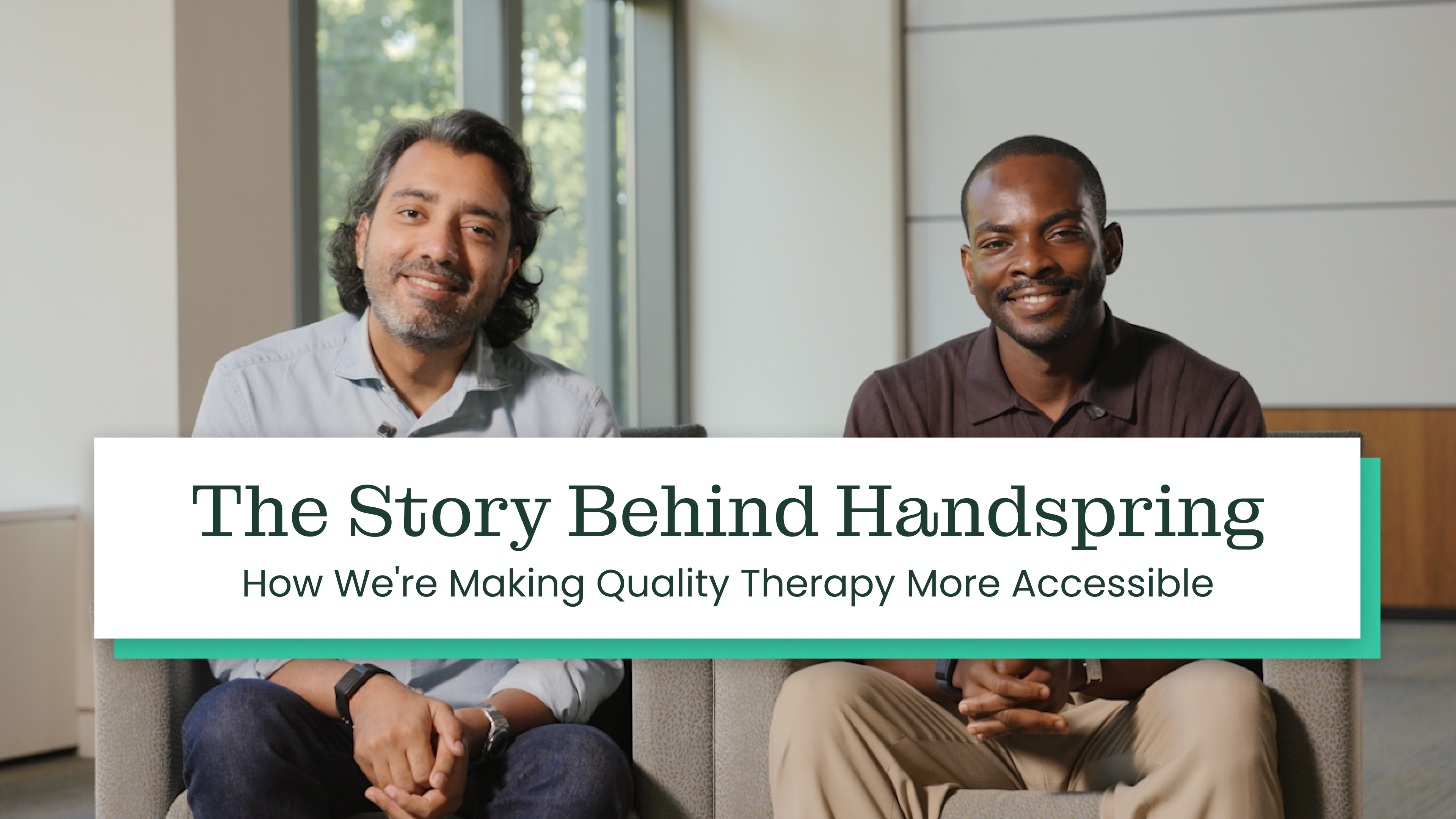
Meet the team behind your child's care
HOW WE HELP
What’s going on with your child?
Tap a concern to see how we help. Swipe for more.
How we help with anxiety
Your child learns cognitive behavioral therapy (CBT), the first-line treatment for anxiety in kids, teens, and young adults, and faces fears in small, planned steps, starting with what feels manageable.
SIGNS PARENTS NOTICE
- Constant worry or “what if” thinking
- Stomachaches or headaches with no medical cause
- Avoiding school, activities, or social plans
- Meltdowns before transitions
HOW WE TREAT IT
Therapy for your child
Learn how thoughts, feelings, and actions interact.
Coaching for parents
Respond to worry without reinforcing it.
Medication, when it helps
Used alongside therapy, not instead of it.
of patients in treatment for anxiety saw clinical improvement
Source: Handspring outcomes
“He began treatment with an anxiety score of 54 and ended at 18.”
How we help with depression
Our clinicians use cognitive behavioral therapy (CBT), a first-line treatment for depression in kids, teens, and young adults, with a focus on behavioral activation, to help your child feel like themselves again.
SIGNS PARENTS NOTICE
- Sad, empty, or hopeless most days
- Irritable, cranky, or quick to anger
- Pulling away from friends and family
- Grades slipping
HOW WE TREAT IT
Therapy for your child
CBT with a focus on behavioral activation.
Support for parents
Learn how to stay connected when your child pulls away.
Medication, when it helps
Used alongside therapy, not instead of it.
of patients in treatment for depression saw clinical improvement
Source: Handspring outcomes
“Lindsay LITERALLY changed not just my daughter’s life, but our entire family dynamic.”
How we help with ADHD
Therapy strengthens executive functioning skills, including planning, organization, time management, focus, and emotion regulation, and parents learn proven strategies to support those skills at home.
SIGNS PARENTS NOTICE
- Trouble staying focused on tasks
- Forgets daily tasks and loses things
- Blurting out answers or interrupting
- Quick frustration or big emotional reactions
HOW WE TREAT IT
Skills for your child
Break big tasks into small, visible steps and build routines that stick.
Parent coaching
Consistent routines, scaffolding new skills, and follow-through, with less conflict at home.
Therapy alongside medication
For many school-age kids and teens, medication combined with behavioral treatment works best.
kids with ADHD have at least one other condition, like anxiety or behavior problems
Source: CDC
“He has gone from failing multiple classes to being an honor student.”
How we help with OCD
Our therapists are trained in exposure and response prevention (ERP), the most effective treatment for OCD. ERP is a specific form of CBT aimed at obsessions and compulsions.
SIGNS PARENTS NOTICE
- Unwanted thoughts that keep coming back
- Needing things to feel “just right”
- Washing, checking, or counting over and over
- Asking the same reassurance questions again and again
HOW WE TREAT IT
ERP for your child
Gradually face triggers while resisting the urge to perform rituals.
Family involvement
Parents practice new responses to reassurance requests with the therapist.
Medication, when it helps
For moderate to severe OCD, alongside ERP, not instead of it.
of kids and teens in a landmark trial reached remission with CBT combined with medication
Source: Published clinical trial
“Tried other solutions and none worked. Thankful for Handspring services helping our family.”
How we help with behavior and defiance
Your child works one-on-one with their therapist to build emotion regulation skills, handle frustration, and get along better at home and school. Parents get coaching alongside, because outcomes are strongest when families are actively involved in care.
SIGNS PARENTS NOTICE
- Loses their temper often
- Refuses requests or rules
- Big reactions to small frustrations
- Hits or breaks things when upset
HOW WE TREAT IT
Therapy for your child
Emotion regulation skills help your child notice their emotions, handle frustration, and reduce conflict at home and school.
Parent coaching alongside
New strategies for the moments that turn into battles, so progress carries over at home.
For teens
Individual skills work, combined with parent sessions.
US kids ages 3–17 has a current behavior disorder diagnosis
Source: CDC
“He’s been so helpful around the house and is all around a happy child.”
How we help with trauma and PTSD
Trauma-focused cognitive behavioral therapy (TF-CBT) is the best-studied treatment for trauma in kids and teens. Parents learn what trauma reactions look like and how to support new skills at home.
SIGNS PARENTS NOTICE
- Nightmares or upsetting memories
- Strong distress at reminders
- Jumpy or easily startled
- Avoiding places, people, or talk connected to it
HOW WE TREAT IT
TF-CBT for your child
Build skills to calm the body and manage big feelings.
Caregiver involvement
Respond calmly in hard moments.
What about medication?
Therapy is the first-line treatment for PTSD in kids and teens.
kids experience at least one potentially traumatic event by age 16. With support, many recover and thrive.
“Michael built a great relationship with my son early on in the sessions.”
Support through life changes
Major transitions like a divorce, a move, a new school, or a loss can turn life upside down. Focused, often short-term therapy helps your child name what they’re feeling, with evidence-based strategies like CBT.
SIGNS PARENTS NOTICE
- Worry about what comes next
- Trouble falling or staying asleep
- Pulling away from friends or family
- Going back to younger behaviors, like clinginess
HOW WE TREAT IT
Therapy for your child
Focused, often short-term therapy to name and work through big feelings.
Guidance for parents
How to talk about the change and what reactions to expect.
Support through grief
Room for sadness and memories while helping them keep moving forward.
US kids have been through a parent’s divorce or separation
Source: Child Trends
“Megan was so valuable to our family during a trying time in our lives.”
WHAT WE TREAT
We cover nearly all mental health conditions.
Our pediatric therapists are trained in evaluating and treating a wide range of conditions and concerns. These include anxiety, depression, disruptive behaviors, other mood disorders, impulse control, and adjustment disorders among others.
- Social anxiety
- Generalized anxiety
- Panic attacks
- Specific phobias
- Sadness
- Depression
- Irritability
- Loneliness
- Withdrawal
- Tantrums
- Defiance
- Obsessions
- OCD
- Impulsivity
- ODD
- ADHD
- Transition to school
- Transition to camp
- Bullying
- Trauma
- Grief
- PTSD
- Life changes
- Parent-child communication
- Parenting challenges
- Parental stress
Check if we take your insurance and what therapy would cost, instantly.
It takes about 2 minutes. Most Handspring families pay less than $30 per session.
Why makes Handspring different

In-person therapy
OUR APPROACH
Why parents choose Handspring
Personalized, evidence-based therapy designed to build lifelong confidence and skills.
1. Specially trained pediatric therapists
Our therapists and clinicians are specially trained to work with children and adolescents across all stages of development. Every clinician spends 15% of their weekly time in expert-led supervision, clinical case review, and ongoing training.
2. Gold-standard behavior therapy
We lead with evidence-based care. Our therapists primarily use CBT (cognitive behavioral therapy), the gold-standard, first-line treatment for therapy..
3. Close collaboration with parents
Parent coaching (behavioral parent management training) is a research-backed approach that helps parents manage emotional and behavioral challenges at home.
4. As effective as in-person care
Virtual therapy is clinically proven to be just as effective as in-person care, backed by a major 2021 meta-analysis in American Psychologist.
FROM PARENTS
What Pennsylvania parents say
Scroll for more →
“Megan was beyond helpful in helping my daughter work through her anxiety and her emotions. She gave her strategies and exercises that helped her cope and gave her a sense of calm. She is now handling her emotions so much better and I actively see her using the strategies she learned with Megan.”
“Hannah was amazing. My daughter had tried 2 therapists before from other companies and didn’t connect with them. She and Hannah connected immediately and she has improved significantly.”
“We previously were seeing an in-person therapist and the logistics of getting him there and his connection with the therapist were a challenge. Having a consistent option for a child to be in the comfort of their own home was really effective. He had measurable improvement…”
“Nicole helped our family tremendously!! Our son is using his newly discovered skills to manage his life and mental health!”
“I have already referred a colleague to Handspring for her daughter. We had a great experience with Emily… she was able to work with my daughter’s anxiety. We are grateful for her expertise and flexibility.”
“Elizabeth is great. She set him at ease and helped him get out of his worry and sadness when they arose and became problematic.”
CLOSE TO HOME
Built for Pennsylvania families
Serving families across the whole state of Pennsylvania
We don’t accept Medical Assistance right now.
- 48Pennsylvania-licensed child and teen therapists
- After schooland evening appointment times
- In networkwith Highmark Blue Cross Blue Shield, Independence Blue Cross, AmeriHealth, Aetna, Cigna and more
- Under $30what most families pay per session · FSA and HSA accepted
YOUR CARE TEAM
Meet some of our Pennsylvania therapists
Every therapist who works with Pennsylvania families is licensed by the Pennsylvania State Board of Social Workers, Marriage and Family Therapists and Professional Counselors and specializes in children and teens.
Licensed by the Pennsylvania State Board of Social Workers, Marriage and Family Therapists and Professional Counselors

Cathlene Dooner

Nicole Zensky-Ortt

Serena Bednarczyk

Gabriela Marigliano

Shanna Hensinger

Katerina Tegeler

Kayli Metheney

Amy Slenker

Andrea Kobylinski

Amy Farrell

Zakiyyah Archie

Julianne Wiebalk

Kristina Dugas

Elizabeth Hahn

Emily Kelly

Allie Herman

Susannah Halsey

Deniyele Levin-Glickstein

Keisha Moore

Leanne McGonigal

Haley Zimmerman

Jaclyn Carson

Alyson Ellison

Jessica Sublett

Molly Cohen

Kimberly McCue

Lynne Hubbard

Pameka Wolgemuth

Lindsay Gonyeau

Michael Rodriguez

Megan Pelko

Kaitlin Snyder
HOW IT WORKS
Fast appointments, flexible scheduling.
Your free consultation is available within 48 hours. After that, you can start treatment within a week. With virtual sessions, flexible scheduling, and length of treatment tailored to your family’s needs, this is high-quality care that’s made to fit your life.
- 1
STEP 1
Free parent consult call
30 min · within 48 hoursTalk with our care team about what’s going on. We check your insurance, tell you your copay, and match you with a licensed therapist. Your child doesn’t need to join.
- 2
STEP 2
Assessment with your therapist
45 minYour child meets their therapist, who does a full assessment and builds a treatment plan around your family’s goals.
- 3
STEP 3
Weekly therapy begins
Within a week · 45–60 min sessionsSessions happen by video from home, with after-school times available and regular check-ins with you along the way.
FAQ
Questions parents ask
Your free 30-minute consult is a chance to share what’s going on for your child, learn about Handspring’s approach, and see if we’re the right fit. We’ll walk through your goals, answer questions, and outline what care could look like for your family. Typically a parent or guardian joins the call.
Yes. We’re in network with Blue Cross Blue Shield (BCBS), Independence Blue Cross, AmeriHealth, Highmark Blue Cross Blue Shield, Aetna, Cigna, UnitedHealthcare, and Optum. Before services start, we look up your benefits and tell you your copay. Most Handspring families pay less than $30 per session. We currently don’t accept Medical Assistance or other state-based plans.
Yes. You can pay with your healthcare FSA or HSA card, or use any credit or debit card and get reimbursed by your FSA or HSA.
Yes. For the most common challenges in children and teens, including anxiety, depression, and trauma, virtual therapy is clinically proven to be just as effective as in-person care. A major 2021 meta-analysis published in American Psychologist reviewed data from tens of thousands of youth and found comparable outcomes.
Children ages 8–12, teens ages 13–17, and young adults ages 18–29. Parents of children over 2 can get parent coaching.
No referral is needed. Parents and caregivers can book directly with us, and it only takes a few minutes.
Absolutely. We see parents as essential partners in the therapy process and encourage regular check-ins with your child’s therapist, so you stay in the loop and feel supported every step of the way.
Yes. When it helps, medication management is provided alongside therapy, in close coordination with your child’s therapist and your family.
All sessions are virtual, from home or any private space. Our therapists offer after-school appointment times so care fits your family’s schedule.
Meaningful change starts here
Start with a free parent consult, within 48 hours.